
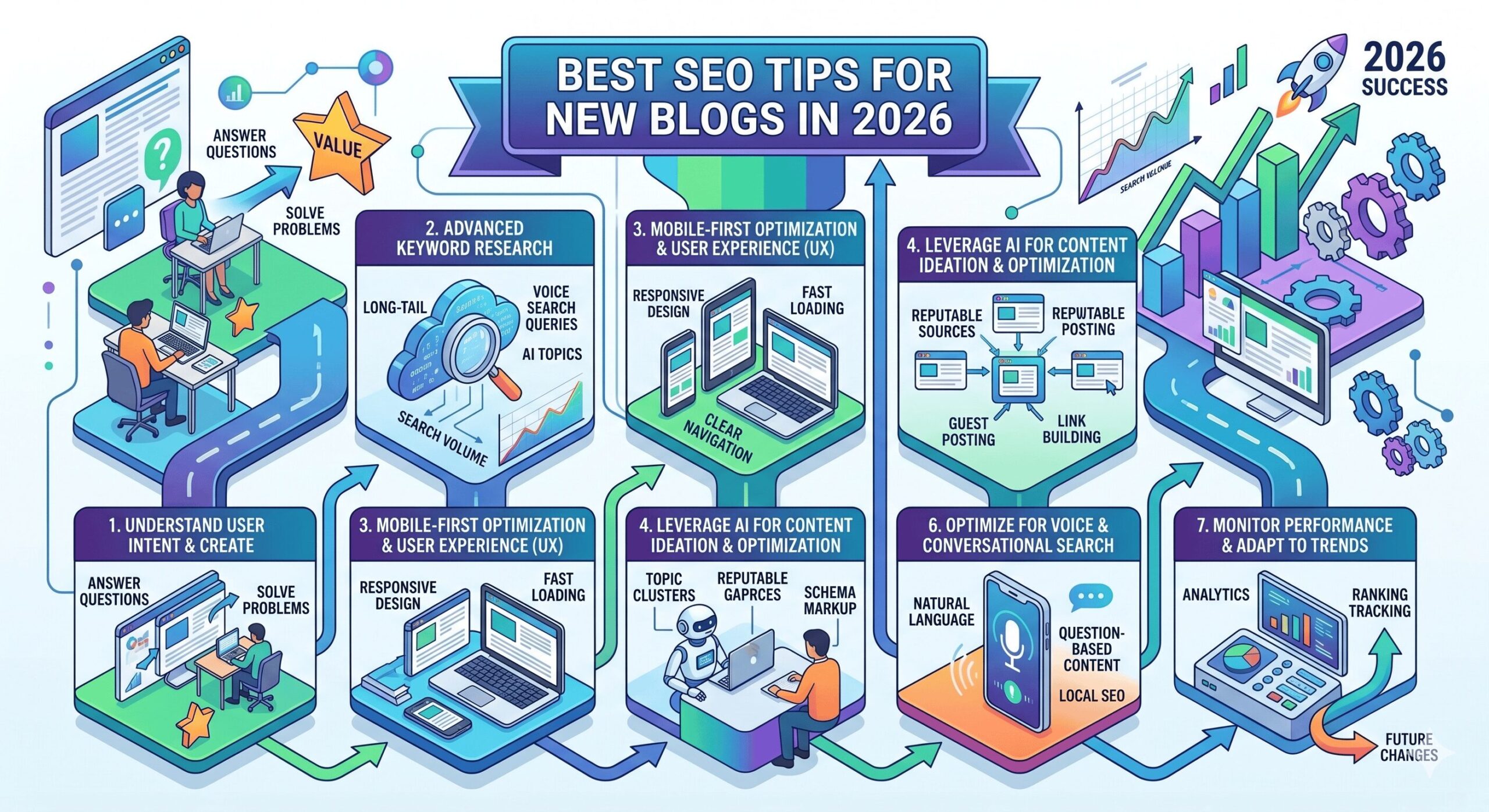
Best SEO Tips for New Blogs in 2026: Complete Guide to Rank Higher
Starting a new blog in 2026 feels exciting, but getting your content noticed in today’s crowded digital landscape is tougher than ever. Google’s algorithms have become incredibly sophisticated, prioritizing helpful, high-quality content that truly satisfies user intent over keyword-stuffed, thin articles. If you’re launching a new blog this year, you need a solid SEO strategy from day one. Here are the most effective SEO tips for new blogs in 2026 that will help you rank higher, attract organic traffic, and build a loyal audience.
1. Master Keyword Research with a Focus on Long-Tail Keywords
Keyword research remains the foundation of successful blog SEO. In 2026, focus on finding long-tail keywords with lower competition but high intent. These phrases typically have lower search volumes but are less saturated and convert better. Use tools like Google Keyword Planner, Ahrefs, or SEMrush to identify keywords with relatively low competition levels. Your primary keyword should appear naturally in your title, opening paragraph, one or two subheadings, and throughout the body at a density of around 2%. Avoid keyword stuffing, as Google’s algorithms now penalize over-optimization heavily.
2. Create Helpful, Engaging, and Comprehensive Content
Google prioritizes one thing above all: helpful, high-quality content that satisfies the user. Your blogs should include accurate, useful information that’s easy to read and frequently updated as your industry evolves. Aim for articles between 1,500 and 2,500 words for informational content, as this length gives you enough space to cover topics with genuine depth—which Google rewards. Focus on content types like how-to guides, product reviews, comparisons, and industry news that provide real value to your readers.
3. Optimize Your Title Tags and Meta Descriptions
Your title tag should be 50–60 characters, front-load the primary keyword, and promise a benefit. For example: “SEO Blogging Guide: 17 Proven Tips (2026)”. Place your primary keyword near the beginning when possible and include power words that trigger emotional responses. Meta descriptions should be 140–155 characters, include the primary keyword, and use actionable language to entice clicks. Every meta description must be unique to avoid algorithm penalties.
4. Use Proper Heading Structure (H1, H2, H3)
Structure your content intentionally using H1, H2, and H3 headings to aid readability and indexing. Include one H1 per page that’s a human-friendly variant of your title. Use H2 tags for main sections and H3 tags for subheadings under various parts of the article. Remember to include a keyword or two in your headings—Google crawlers identify these keywords and boost your page accordingly.
5. Optimize URL Structure and Slugs
Clean, descriptive URLs improve both user experience and search engine understanding. Your URL slug should include your primary keyword, be short and easy to read, and accurately reflect your content’s topic. Avoid using numbers, dates, or unnecessary parameters unless they provide specific value. Create keyword-rich slugs like “best-seo-tips-new-blogs-2026” instead of “post12345”.
6. Focus on Mobile-Friendly Formatting
Mobile users now account for the majority of web traffic, so optimize for mobile reading. Use short paragraphs (2–4 lines maximum) that each contain a single clear point. Keep paragraphs to no more than three or four sentences, and use occasional short sentences to maintain pace [web:5]. Online readers scan before committing to read in full, so make your content skimmable.
7. Build Internal and External Links Strategically
Include at least one internal link to a relevant page on your website, helping Google understand your site structure. Internal links improve user engagement and help search engines crawl your site more effectively. Also add external links to authoritative sources when referencing data or studies—this builds credibility and signals to Google that your content is well-researched.
8. Optimize Images with Alt Text
Every image on your blog should have descriptive alt text that includes relevant keywords when appropriate. Alt text helps search engines understand what your images are about and improves accessibility for users with screen readers.
9. Consider AI Search Optimization
In 2026, AI-generated search summaries (like Google’s AI Overviews) are changing how content ranks. Use named entities—refer to tools, people, platforms, and concepts by their full names in context, not with vague pronouns. Write complete, self-contained sentences that make sense on their own without requiring previous context.
10. Refresh Old Content Regularly
Going back to old blog entries to weed out broken links and outdated information is crucial. Google ranks inaccurate sites lower, so making effort to regularly revise old articles improves your structuring and rankings. Updating content signals to Google that your blog is active and current.
FAQ Section
The best SEO tip for new blogs in 2026 is to focus on creating helpful, comprehensive content that satisfies user intent, combined with thorough long-tail keyword research and proper on-page optimization including title tags, meta descriptions, and heading structure.
For informational content, aim for articles between 1,500 and 2,500 words. This length gives you enough space to cover topics with genuine depth, which is what Google rewards in 2026.
Yes, but naturally. Your primary keyword should appear at around 2% density throughout your content—in your title, opening paragraph, one or two subheadings, and throughout the body. Avoid keyword stuffing as it triggers over-optimization penalties.
Your meta description should be 140–155 characters, include the primary keyword, and use actionable language to encourage clicks. Keep it under 160 characters to avoid truncation in search results .
AI-generated search summaries like Google’s AI Overviews are changing rankings in 2026. Use named entities (full names for tools, people, concepts) and write complete, self-contained sentences for better AI search visibility.
COMMENTS