
Early Signs of Vitamin Deficiency and How to Fix It
Vitamin deficiency is more common than most people realize, especially in today’s fast-paced lifestyle where processed food often replaces balanced meals. Your body needs essential vitamins like A, B, C, D, E, and K to function properly. When you lack these nutrients, your body starts showing early warning signs. Recognizing these symptoms early can help prevent serious health issues and improve your overall well-being.
Common Early Signs of Vitamin Deficiency
Understanding the early symptoms of vitamin deficiency is crucial. These signs are often subtle but can become severe if ignored. Here are some of the most common indicators:
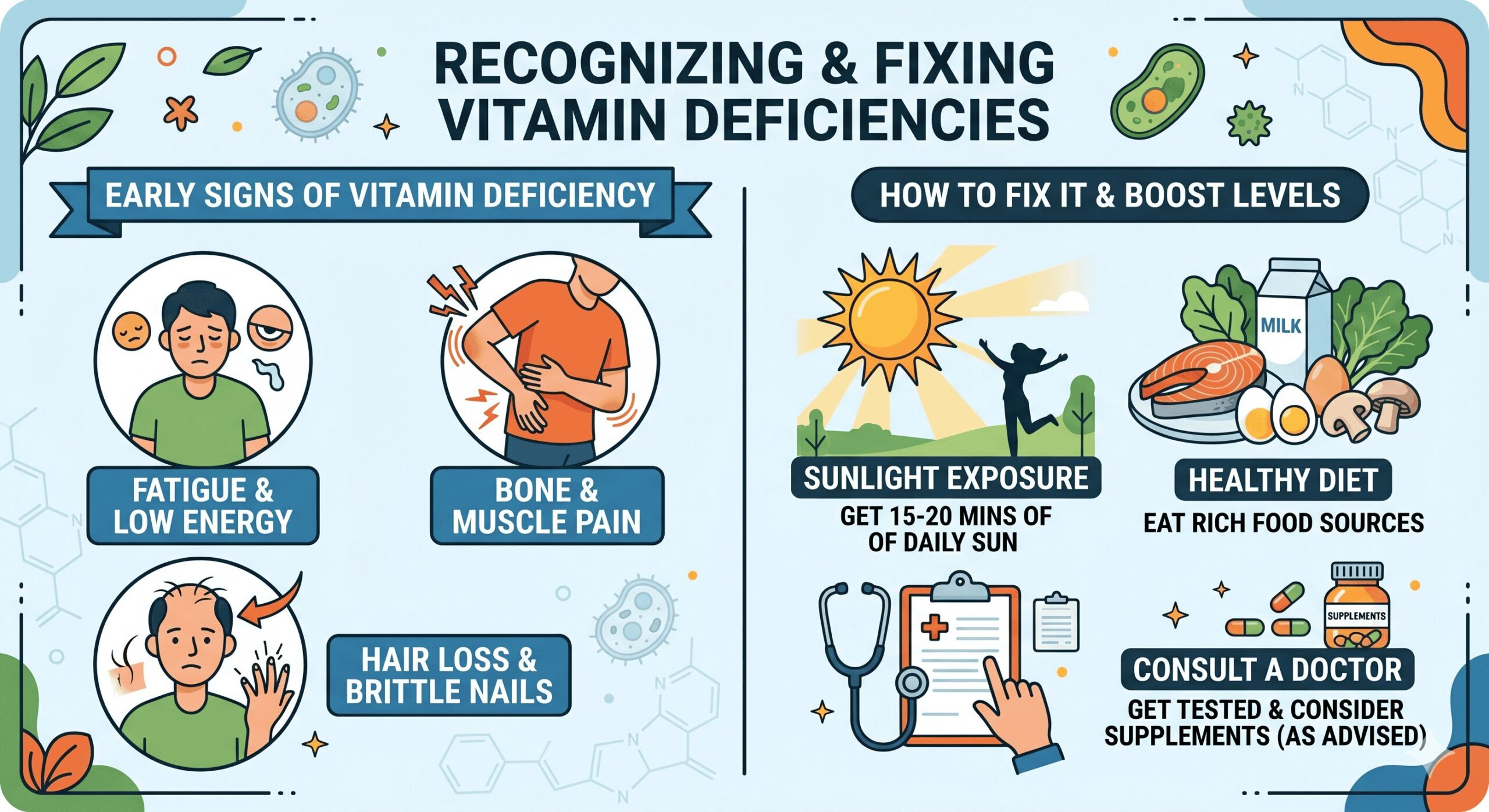
1. Constant Fatigue and Weakness: A deficiency in Vitamin B12, Vitamin D, or iron can make you feel tired even after adequate rest.
2. Hair Fall and Dry Skin: Lack of biotin (Vitamin B7), Vitamin E, and Vitamin A can lead to excessive hair fall and dull skin.
3. Frequent Illness: If you catch colds or infections often, your body may be low in Vitamin C or Vitamin D, which are essential for immunity.
4. Mouth Ulcers and Cracked Lips: These are common signs of Vitamin B deficiencies, especially B2 and B12.
5. Bone Pain or Muscle Weakness: A deficiency in Vitamin D or calcium can lead to weak bones and muscle cramps.
Major Causes of Vitamin Deficiency
Several factors contribute to vitamin deficiencies, including:
• Poor diet lacking fruits and vegetables
• Excessive junk or processed food consumption
• Lack of sunlight exposure (Vitamin D deficiency)
• Digestive disorders affecting nutrient absorption
• Certain medications interfering with vitamin absorption
How to Fix Vitamin Deficiency Naturally
The good news is that most vitamin deficiencies can be corrected with simple lifestyle and dietary changes. Here are effective ways to restore your vitamin levels:
1. Eat a Balanced Diet: Include fresh fruits, leafy vegetables, whole grains, nuts, and dairy products in your daily meals.
2. Increase Sun Exposure: Spend at least 15–20 minutes in sunlight daily to boost Vitamin D levels.
3. Add Vitamin-Rich Foods:
• Vitamin A: Carrots, spinach
• Vitamin B12: Eggs, dairy, meat
• Vitamin C: Oranges, lemons, amla
• Vitamin D: Sunlight, fortified milk
• Vitamin E: Almonds, seeds
4. Stay Hydrated: Drinking enough water helps in proper nutrient absorption.
5. Consider Supplements: If your deficiency is severe, consult a doctor and take supplements as recommended.
When to See a Doctor
If symptoms persist despite dietary improvements, it is important to consult a healthcare professional. Blood tests can help identify specific deficiencies and guide proper treatment.
FAQs: Vitamin Deficiency
What are the most common vitamin deficiencies?
The most common deficiencies include Vitamin D, Vitamin B12, iron, and Vitamin C.
How long does it take to recover from vitamin deficiency?
Recovery time varies depending on the severity, but mild deficiencies can improve within a few weeks with proper diet.
Can vitamin deficiency cause hair loss?
Yes, deficiencies in biotin, Vitamin D, and iron can lead to hair thinning and hair loss.
Is it safe to take vitamin supplements daily?
Supplements should only be taken as per medical advice to avoid overdose or side effects.
How can I check if I have a vitamin deficiency?
A simple blood test recommended by a doctor can help diagnose any deficiencies.
COMMENTS