
Website Hosting Options for Beginners: Shared vs VPS vs Cloud
Choosing the right website hosting is one of the most important decisions for beginners starting an online journey. Whether you are launching a blog, business website, or eCommerce store, understanding different hosting types can help you avoid performance issues and unnecessary costs. The three most common hosting options are shared hosting, VPS hosting, and cloud hosting. Each comes with its own advantages, limitations, and ideal use cases.
What is Shared Hosting?
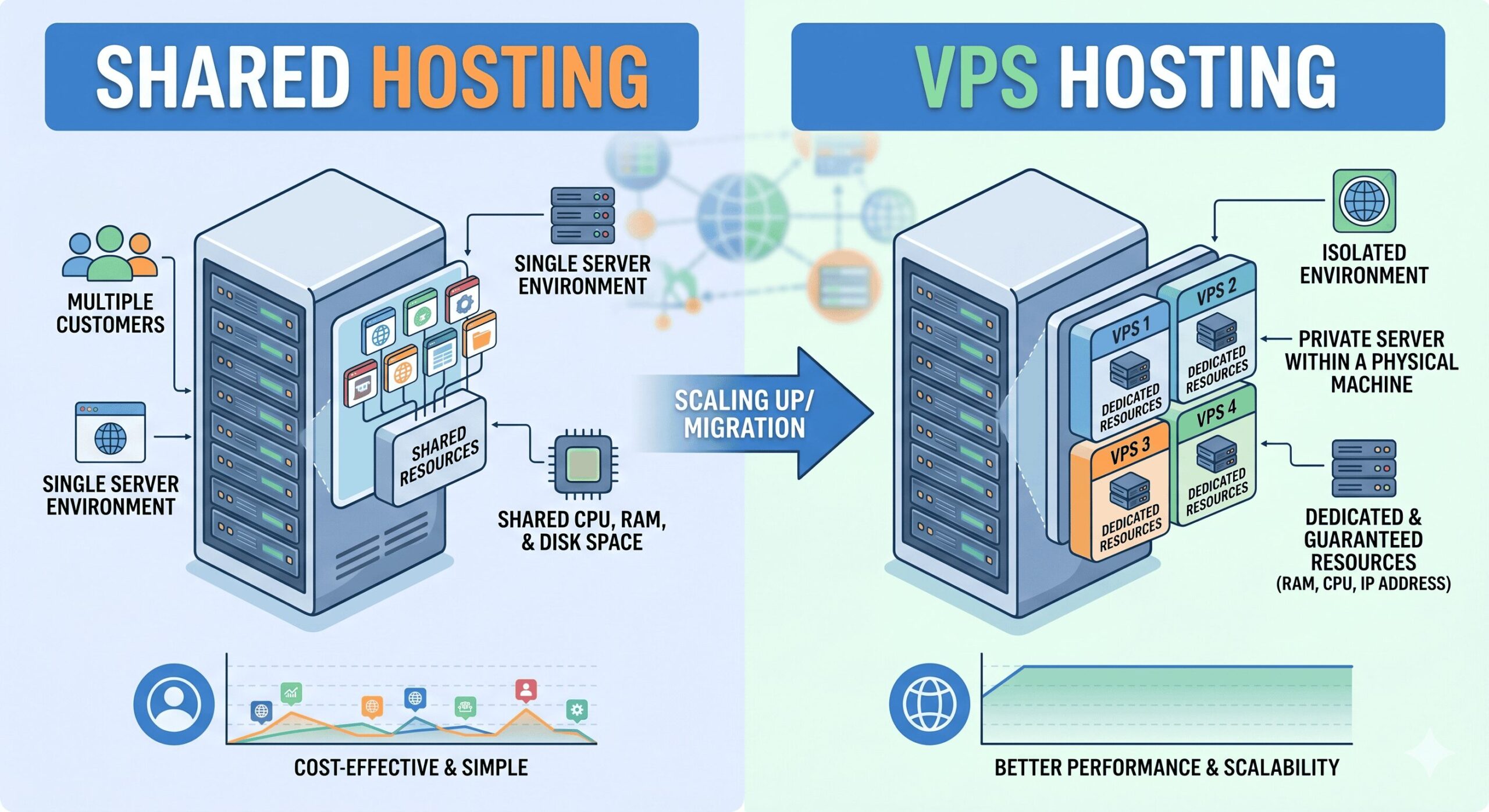
Shared hosting is the most beginner-friendly and affordable hosting option. In this setup, multiple websites share the same server resources such as CPU, RAM, and bandwidth. It is ideal for small websites, personal blogs, or startups with low traffic.
The biggest advantage of shared hosting is its low cost and easy setup. Hosting providers usually manage everything including maintenance, updates, and security. However, since resources are shared, your website performance can be affected by other websites on the same server.
What is VPS Hosting?
VPS (Virtual Private Server) hosting is a step up from shared hosting. Although multiple users still share a physical server, each user gets a dedicated portion of resources. This means better performance, improved security, and more control over the hosting environment.
VPS hosting is suitable for growing websites that need more stability and customization. It allows you to install custom software and configure server settings. However, it requires some technical knowledge to manage efficiently.
What is Cloud Hosting?
Cloud hosting is the most advanced and scalable hosting solution. Instead of relying on a single server, your website is hosted across multiple interconnected servers. This ensures high uptime, faster loading speeds, and the ability to handle traffic spikes easily.
One of the biggest benefits of cloud hosting is scalability. You only pay for the resources you use, making it a flexible option for businesses expecting growth. It is ideal for high-traffic websites, SaaS platforms, and eCommerce stores.
Shared vs VPS vs Cloud Hosting Comparison
When comparing shared hosting vs VPS vs cloud hosting, beginners should focus on cost, performance, scalability, and ease of use. Shared hosting is best for low-budget beginners, VPS hosting is ideal for growing websites needing more control, and cloud hosting is perfect for scalability and high performance.
If your website is just starting, shared hosting is usually enough. As your traffic grows, upgrading to VPS or cloud hosting can significantly improve user experience and SEO performance.
Which Hosting Should You Choose?
The best hosting option depends on your website goals and technical expertise. Beginners with limited budget should start with shared hosting. If you are running a business website or expecting moderate traffic, VPS hosting is a better choice. For large-scale projects or high traffic demands, cloud hosting offers the best reliability and performance.
FAQ: Website Hosting for Beginners
1. Which hosting is best for beginners?
Shared hosting is the best option for beginners due to its affordability and ease of use.
2. Is VPS better than shared hosting?
Yes, VPS hosting offers better performance, security, and control compared to shared hosting.
3. What is the advantage of cloud hosting?
Cloud hosting provides high scalability, better uptime, and the ability to handle traffic spikes efficiently.
4. Can I upgrade my hosting later?
Yes, most hosting providers allow easy upgrades from shared to VPS or cloud hosting as your website grows.
5. Does hosting affect SEO?
Yes, faster loading speeds and uptime from better hosting can improve your website’s SEO performance.
COMMENTS